Species Spotlight: Black bear (Ursus americanus)
This month, we cast the Species Spotlight on the American black bear!

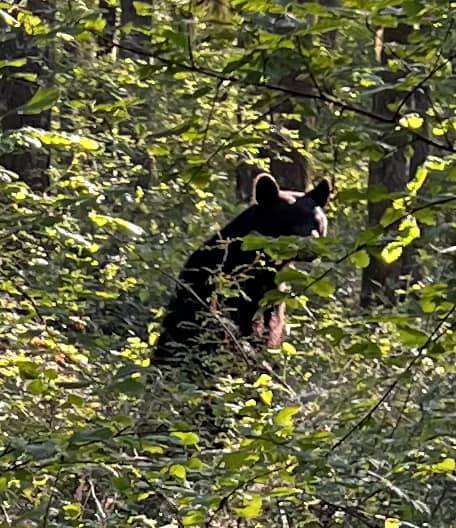
Black bear on NLT protected lands, photo by NLT Stewardship Manager Jake Pool
This time of year, we look forward to spotting signs of bears on our protected areas, from claw marks on tree trunks to occasional game camera footage. Our Stewardship Team is in the field most days of the week, and they bring back reports of bear tracks, thatching ant piles disturbed by bears, and rare sightings on site visits.
This video from one of our protected areas recently garnered quite a bit of attention on our social media.
Characteristics & Range
American black bears (Ursus americanus) are common throughout most of Washington, with recent data from WDFW reporting ~22,000 across the state. Among black bears, males are larger than females, with the average adult bear weighing 100-300 lbs. and standing around 5 feet tall on its back legs. While it is a common misconception that they are all black, they can also be brown, cinnamon, rust colored, and even blonde.
Lighter-colored Ursus americanus are often confused for grizzly bears; however, grizzlies are much larger and have a prominent shoulder hump marking the highest point on their body. Currently, the only known population of grizzly bears in Washington is in the Selkirk Mountain range in the northeastern corner of the state.
Important Spreaders of Nutrients

Rock flipped over 3 ft by a Black bear searching for insects & larvae
Black bears have a varied diet, including berries, nuts, small mammals, fish, insects, and birds. They find their food sources in different habitats seasonally, from meadows for foraging in the spring, to riparian habitat and early successional habitat (post-disturbance) with abundant berries and insects in the summer, and mature forests with nuts and seeds in the fall. They are important processors and seed spreaders, recycling important nutrients throughout the ecosystem.
In particular, black bears play an important role in transferring rich, marine-derived nitrogen and other nutrients from salmon carcasses along the river shoreline into the surrounding forest, as they transport carcasses during feeding.
Living with Bears
As humans encroach on bear habitat, encounters become more frequent, making it increasingly important to avoid conflict through preventative action. One of the most important steps humans can take is to avoid feeding bears, either directly or indirectly. Manage garbage by putting it out in the morning before pickup, cleaning the can regularly, and throwing out food waste, especially meat, just before the garbage truck arrives. When camping, always bring a bear can to store any food or scented items.
Food left out overnight for pets, and even bird feeders (birdseed and liquid), can draw in bears and condition them to return for food. Bears who become conditioned to these food sources often die, either killed by a property owner or wildlife personnel removing the bear.
For more ways to avoid bear conflict, and for what to do in case of an encounter, find more information on WDFW’s website: Black bear | Washington Department of Fish & Wildlife

Black bear claw marks on bark on NLT protected lands, photo by Jake Pool
NLT Protected Lands & Black Bears
The Land Trust’s work to protect and restore habitat for salmon recovery directly supports black bears and all Nisqually wildlife who depend on salmon. As we continue to expand our protected lands, we aim to steward a variety of habitat types including coniferous and deciduous forests, prairie-oak habitat, wetlands and riparian areas with cool, clean water sources. It inspires us to see bears using these areas and reaffirms the importance of nurturing diverse habitat types so they can thrive from season to season.