Species Spotlight – Western Bumble Bee

Species Spotlight: Western Bumble Bee (Bombus occidentalis)

This month, we cast the Species Spotlight on the Western Bumble Bee!

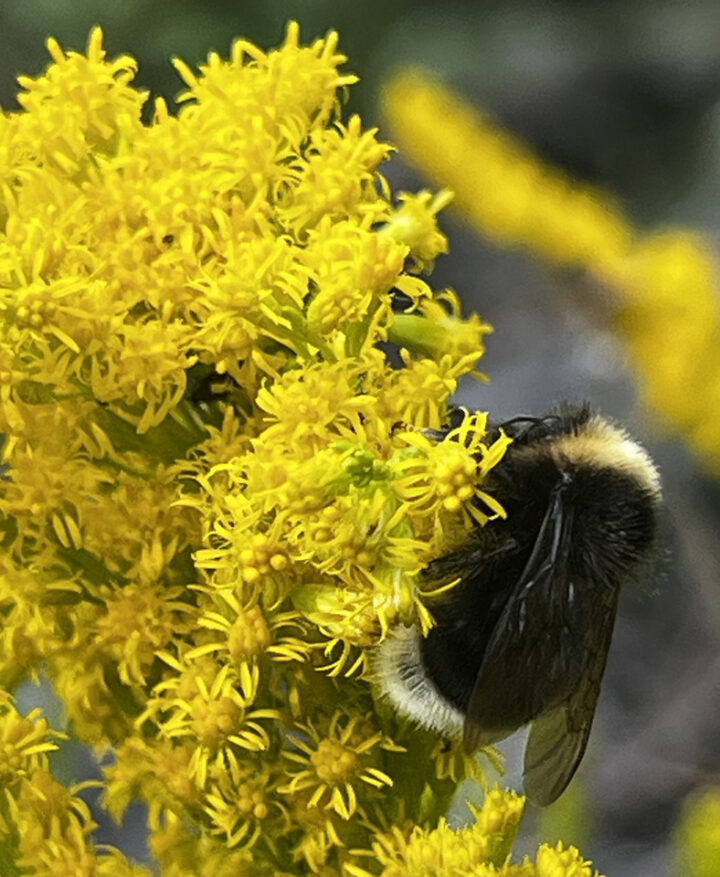
While its coloring varies, it is commonly identified by a black abdomen and a tail that appears to be dipped in white.

Upon visiting one of our properties north of Ashford, Stewardship Manager Jake Pool found 14 different pollinators on one goldenrod patch in just 30 minutes of observation! Among these was the Western Bumble Bee.

The Western Bumble Bee is native to the west coast of the United States and Canada. What was once a common species across a vast region is now in decline and even considered quite rare.

As a generalist pollinator, the Western Bumble Bee is very important to the local ecosystem, pollinating a wide variety of flowering plants. It lives in small, annual colonies that depend on diverse flora, as well as logs, stumps, and abandoned nests throughout the nesting season. It prefers the cooler temperatures found in subalpine and montane areas.

Currently, the Washington Department of Fish and Wildlife has classified its sensitivity to climate change as Moderate-High, as shifts in temperature, precipitation, and snowpack impact its nesting and other practices.

Conservation Concerns

The Western Bumble Bee is currently designated as a Species of Greatest Conservation Need under the State Wildlife Action Plan, as well as a Priority Species under the WDFW Priority Habitat and Species Program. In a study conducted by the U.S. Geological Survey alongside bumble bee research groups, data showed a 93% decline in occupancy from 1998 to 2018. This trend of decline has continued, and recent surveys in Washington show a small number of remaining populations across the state. WDFW has requested that these be reported whenever seen.

NLT Protects Habitat

Much of our field work by partners, volunteers, and staff includes planting native plants such as Willows, Maples, Goldenrod and Pearly Everlasting, as well as invasive weed management across Nisqually Land Trust properties. By replenishing these plants which are especially popular among pollinators, we hope to support a healthy habitat for the Western Bumble Bee, along with many others.

Photo/Video Credit: Jake Pool


Species Spotlight – Nisqually Chum Salmon

Species Spotlight Graphic

January Species Spotlight

Nisqually Chum Salmon (Oncorhynchus keta) 

By Heather Paladini

Each month, we will spotlight a species of fauna, flora, or fungi from within the Nisqually Watershed. Stay tuned to see what’s being spotted in the watershed each month!

This month, we cast the Species Spotlight on the Nisqually chum salmon. 

The Nisqually chum salmon run in the winter. They use the lower parts of prairie streams in the Nisqually River watershed for spawning, including both Muck and Yelm creeks. Muck Creek supports four species of salmonids, with chum being the most numerous of the anadromous fish in the creek. Muck Creek is also the most significant stream for Nisqually chum, as the largest proportion of these chum spawn here. Up to one-third of the entire Nisqually River chum run use Muck Creek.  

The Nisqually winter chum run is the latest-timed chum run in the Pacific Rim.  While other Puget Sound chum spawn in November, the Nisqually chum spawn in late December through January. Why do these salmon run so late? What makes these chum salmon different from others?  

Nisqually Chum: Unique Adaptations

These chum are thought to be genetically unique. By reacting to different environmental conditions over time, they have adapted to prairie streams including Muck Creek, and the hydrology of the river and its tributaries at this particular time of the year. 

A Pierce County report on the Muck Creek Basin suggests that the chum that use Muck Creek for spawning have been influenced by its intermittent stream flow conditions. As a result, they have timed their runs to coincide with passable stream flows which happen later in the season. Adapting to the unique stream flows of this creek, which favor late-arriving fish, is a phenomenon seen in other spawning fish populations elsewhere. 

This adaptation may give these chum an advantage over their fall counterparts. It enables them to avoid most of the winter floods responsible for displacing salmon eggs within the gravel or smothering them with silt. Additionally, this allows for faster incubation: the later they arrive, the warmer the water will be for the incubating eggs.  

Another advantageous attribute of the chum is that half of the adult chum in any given year returning to Muck and Yelm Creeks are 3 years old and the other half are 4 years old. This makes them more resilient to unusually calamitous stream flow years, because it would only affect half the population of a brood, with the other half returning a different year. 

Cultural Significance of Nisqually Chum

The late-timed chum are culturally significant to the Nisqually Tribe because they are the only fresh fish returning at a time when other salmon runs are over. Historically, the winter chum run was an entirely wild salmon run that could support a harvest. Unfortunately, the runs in recent years have been declining and are no longer large enough to support a fishing season.   

NLT Protects Nisqually Chum Salmon Habitat

The Nisqually Land Trust works to protect and steward important salmon habitat lands including the lower reach of Yelm Creek, an important habitat for the Nisqually chum. The photo and video shown here were taken at Yelm Creek on the Petersen Farm. NLT has a conservation easement at Petersen Farm and works closely with the Petersen family to conserve salmon habitat for this genetically unique species of salmon.  

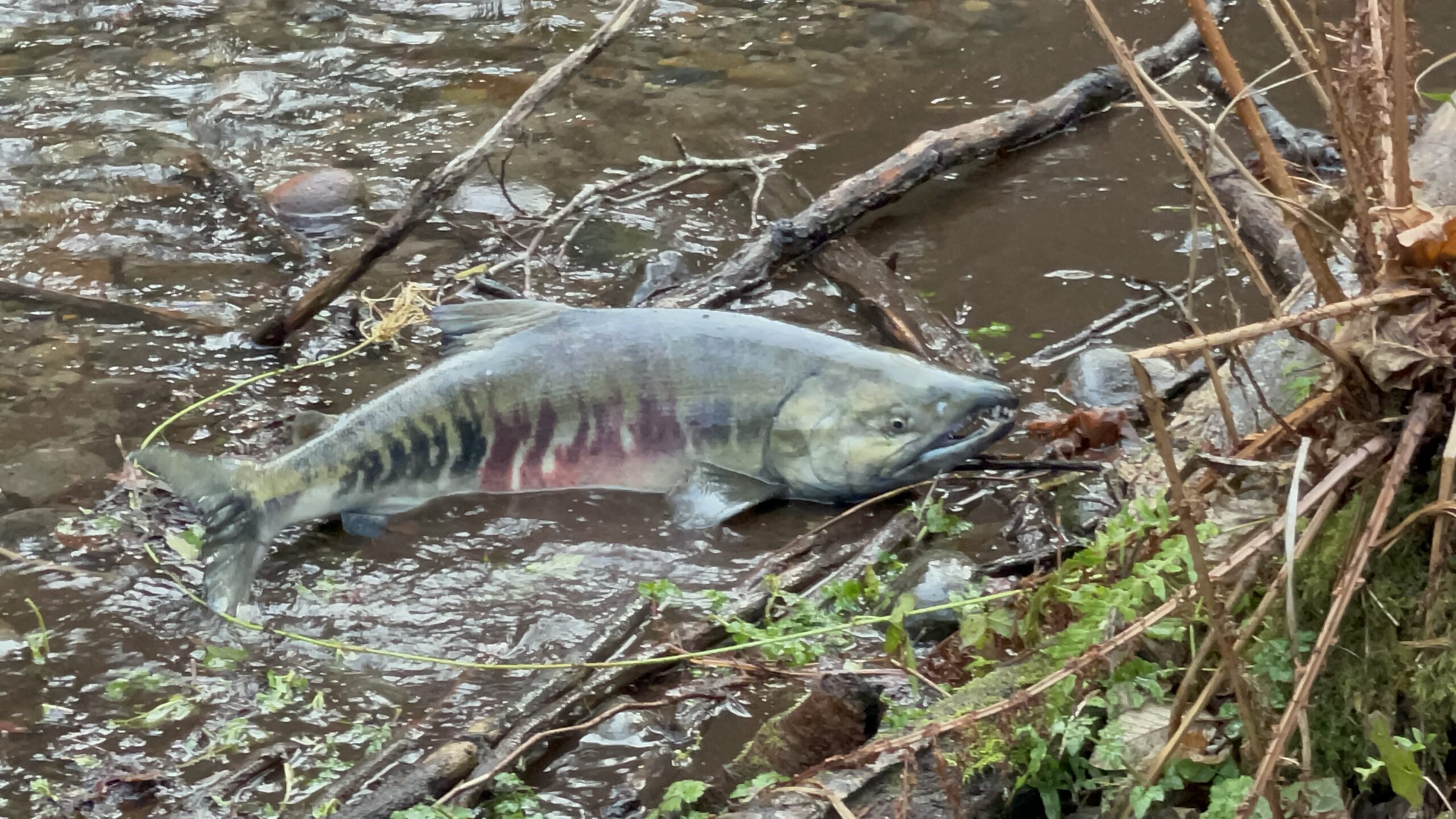
Nisqually chum salmon in Yelm Creek

This chum was spawning in the lower Yelm Creek a couple of weeks ago, and he gave our ED Jeanette a close-up chance to meet him. Notice his beautiful purple-red vertical markings and his well-developed teeth. These canine-like teeth may be what gave the chum their common alias dog salmon.  Photo credit: Jeanette Dorner

Stay tuned for next month’s Species Spotlight!

Settling Into The Volunteer Coordinator Groove – Emily Simroth

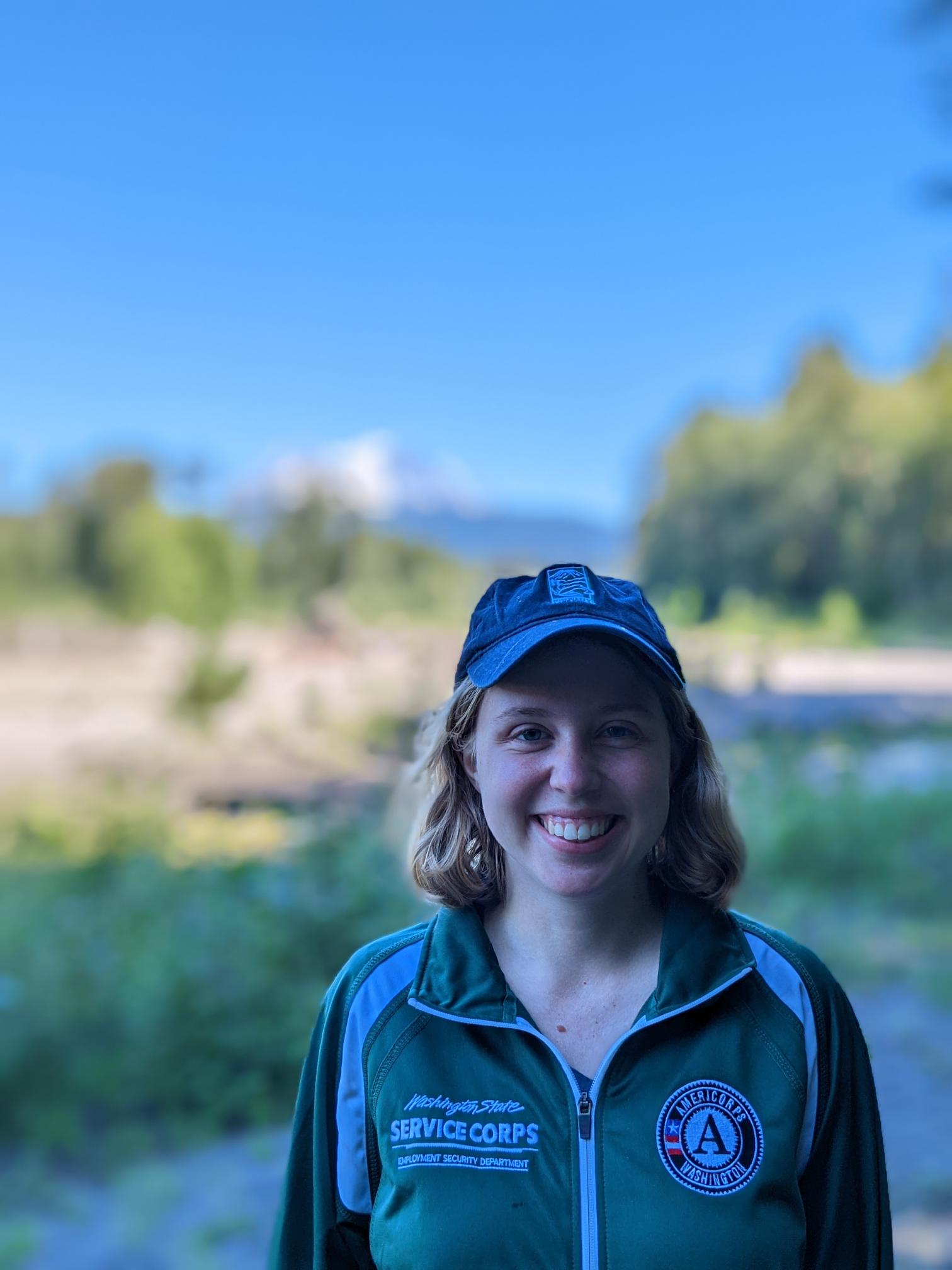
My name is Emily, and I serve as the Habitat Stewardship AmeriCorps Member with the Nisqually Land Trust. My responsibilities include leading habitat restoration volunteer work parties once or twice a week and coordinating the site steward program, through which volunteers “adopt” a site to periodically monitor for human impacts, invasive plants, and other issues. I also spend over half my time in the field, serving with other staff and my fellow AmeriCorps member on environmental stewardship projects across the nearly 6,000 acres that Nisqually Land Trust owns.

In the past, I’ve volunteered for local community organizations many times, from attending one-off events at an animal shelter to helping out every week at a pollinator garden. I had great experiences with other volunteer coordinators who were enthusiastic, knowledgeable, and great at making me feel part of the group. When I started this position, I was excited to step into that role, to be the one recruiting volunteers and welcoming them into the Land Trust community, to be the one sharing what I know about the land we work on and the importance of protecting it. I hoped I would enjoy this part of my service, but I was nervous, too—I had never served as a volunteer coordinator before.

These past few months, my hope was validated. I discovered that volunteer coordination is something I would be happy to continue doing beyond my term in AmeriCorps. Each week I advertise events, recruit volunteers, and lead work parties—welcoming volunteers, introducing them to the task of the day, checking in and answering questions, and of course, handing out snacks.

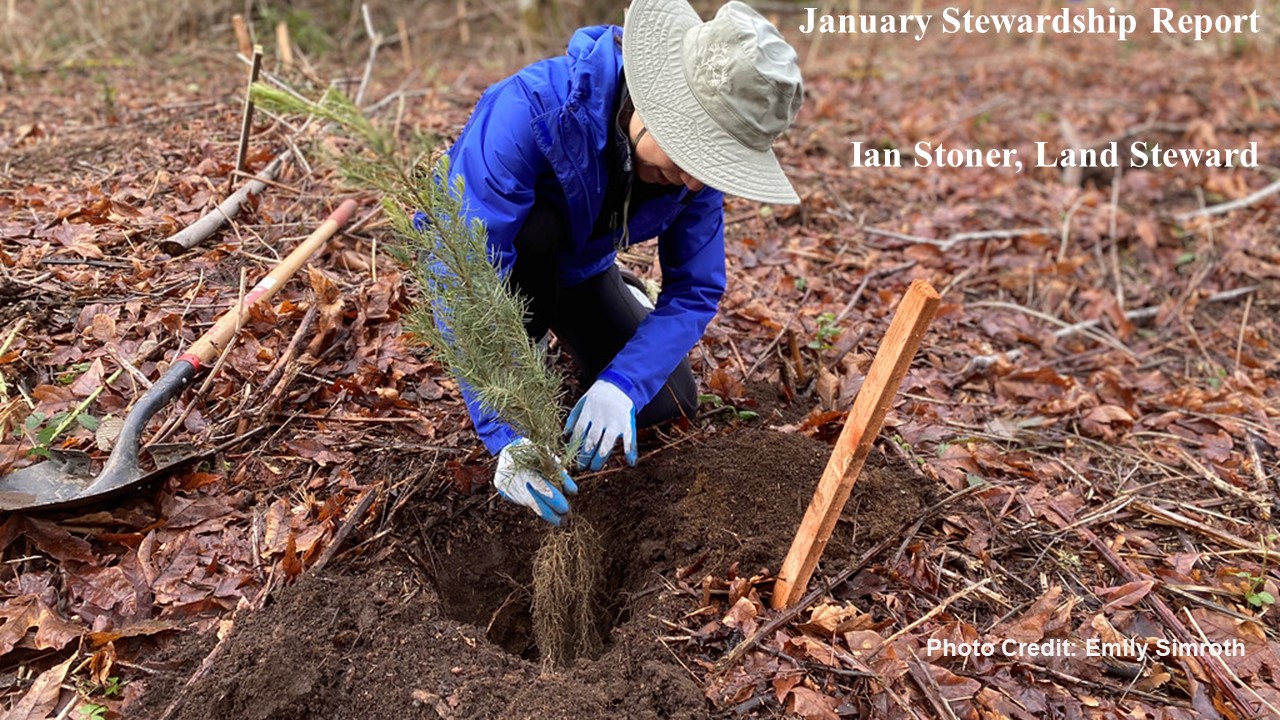
Over these past few months, the volunteers I coordinate have contributed over five hundred hours of their time. They planted over two thousand trees and shrubs and removed dozens of garbage bags worth of invasive species and old plant protector tubes. The volunteers have a shared passion for the environment that is genuinely inspiring to be around, and each individual brings their own knowledge and experiences to the work we’re doing.

This November in particular, groups of volunteers came out to a field along the Nisqually River multiple days a week to plant native trees, shrubs, and wildflowers. It’s great to see familiar faces each time—from folks who’d been coming to work parties for years, to those who joined for planting this year and returned week after week. I love chatting with the volunteers I already know, hearing about what’s new in their lives as we work and learning from the expertise of those who have been doing this work longer than I have. I have a tremendous respect for those who choose to give their time, week after week, on rainy days and freezing ones, to help make the natural environment a bit better, tree by tree.

At the same time, a new face is always exciting. I love getting to know folks who haven’t worked with the Land Trust before, learning what motivated them to come out on a Wednesday or Saturday morning, and in turn, sharing what the Nisqually Land Trust does and explaining how the forest we’re restoring in that field along the shore will be important for the salmon, who need a shaded river with woody debris from fallen trees. I always enjoy taking new volunteers (and some returning ones!) down to the Nisqually after we finish planting for the day to share more about the river—from the needs of the salmon who live in it, to its dramatic erosion of the bank we’re standing on.

The accomplishments of all our volunteers are incredibly motivating. It’s so satisfying to look back at the rows and rows of plants that are in the ground at the end of the work party and announce that this morning, we’ve planted hundreds.
As one of four people on the field stewardship team at the Land Trust, it’s easy to see that we couldn’t tackle projects like that November planting without all the volunteers who chose to pitch in. I’m so glad I’ve had the opportunity to get to know these folks through my AmeriCorps position, and I look forward to many successful Wednesday and Saturday morning work parties in 2023, as we begin our next planting projects.